
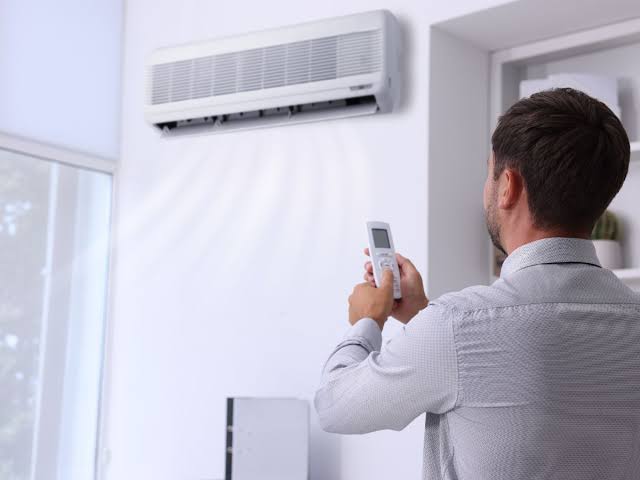
With online retailers and budget trade suppliers selling DIY split-system kits and pre-charged air conditioning units directly to consumers, the temptation to hire a general builder or have a go at fitting a unit yourself has never been higher.
Cutting corners on installation credentials poses serious legal and practical risks. In the UK, installing air conditioning is not a standard plumbing or handiwork task; it is a strictly regulated technical trade.
Here is why using an F-Gas certified installer is not merely recommended—it is a legal necessity designed to protect your home and your wallet.
What Is F-Gas and Why Is It Regulated?
Modern air conditioning units rely on synthetic refrigerant gases—most commonly R32 or R410A—to absorb and transfer heat. While these hydrofluorocarbons (HFCs) do not damage the ozone layer like older banned CFCs, they remain potent greenhouse gases with high Global Warming Potential (GWP) if vented into the atmosphere.
Under the UK Fluorinated Greenhouse Gases Regulations (enforced by the Environment Agency):
- It is a criminal offence for any individual to install, commission, service, or decommission equipment containing fluorinated greenhouse gases without possessing a valid personal F-Gas qualification (e.g. City & Guilds 2079 or BPEC).
- Any business contracting to carry out installation work must hold a formal Company F-Gas Certificate issued by an approved body such as REFCOM, Quidos, or Bureau Veritas.
The 4 Major Risks of Using an Uncertified Installer
1. Instant Warranty Invalidation
Every reputable manufacturer—including Daikin, Mitsubishi Electric, Panasonic, Fujitsu, and Toshiba—requires the installer’s individual and company F-Gas registration number on warranty registration documents. If your unit is fitted by a tradesperson without these credentials, the manufacturer’s 3- to 7-year parts warranty is voided on day one. If the compressor fails six months in, you will bear the full replacement cost.
2. Catastrophic Refrigerant Leaks and Performance Degradation
Connecting the indoor and outdoor units requires flaring copper pipes to microscopic precision, pulling a deep vacuum to remove all atmospheric air and moisture from the lines, and testing pressure using dry nitrogen. If an uncertified installer fails to flare connections properly or skips pressure testing, refrigerant gas will gradually leak out. Symptoms include:
- The system blowing tepid, uncooled air.
- Ice forming across the indoor coils or outdoor valves.
- The compressor overheating and burning out completely.
- Potential exposure to high-pressure refrigerant leaks.
3. Flammability and Safety Hazards
Modern, eco-friendly systems utilize R32 refrigerant, which carries an A2L safety classification (mildly flammable). Handling, vacuuming, and pressure testing R32 requires calibrated tools, spark-proof recovery equipment, and deep understanding of ventilation safety envelopes. Using generic plumbing tools on R32 systems introduces real structural and fire hazards.
4. Home Insurance Complications
In the event of an electrical fire, structural water damage from a blocked internal condensate pump, or a refrigeration incident, your home insurance provider will investigate whether the equipment was installed by a suitably qualified contractor in compliance with UK Building Regulations. An uncertified installation can give an insurer grounds to deny a claim.
The airconunit.co.uk 10-Point Standard
At airconunit.co.uk, we founded our platform specifically to eliminate rogue traders and bring complete transparency to the UK cooling sector. Every certified professional on our directory must clear our comprehensive 10-point vetting system, which includes:
- Active verification against the national F-Gas register (REFCOM / Quidos).
- Proof of comprehensive Public Liability Insurance (minimum £2M cover).
- Verified Companies House standing and trading history.
- Confirmation of manufacturer-approved commissioning processes.
- Validated local customer reviews and workmanship guarantees.
Do not gamble with the safety and warranty of your home cooling investment.
Verify your installer’s credentials before you hire.