
When British heatwaves strike, the immediate instinct is to rush to Argos, B&Q, or Currys and pick up a portable air conditioner. But as summer temperatures rise more consistently each year, many are questioning whether a portable unit is a wise long-term investment, or whether installing a permanent split-system is the better financial move.
Both options have distinct applications. Here is an honest, objective comparison of how they perform across everyday UK living conditions.
How They Differ Mechanically
- Portable Air Conditioners: Single, standalone appliances on castors. They suck in ambient room air, cool it through internal refrigerant coils, blow cold air into the room, and pump hot air out of a 1.5-metre flexible exhaust hose dangling out of an open window.
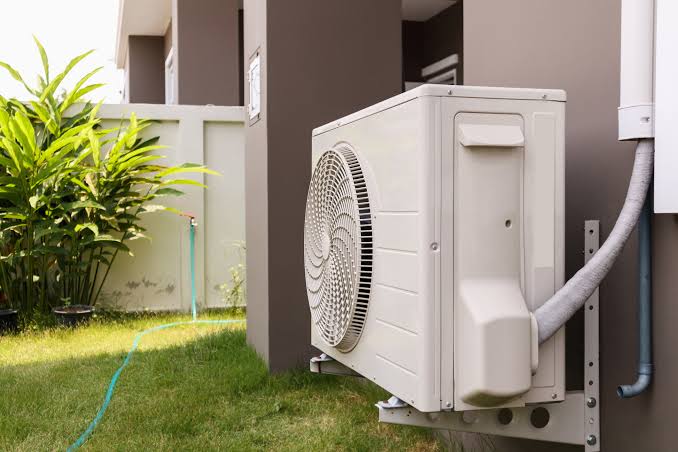
- Split-System Air Conditioners: Two-part installations. The noisy, heat-generating mechanical components (compressor and condenser) sit outside the house on a patio or external bracket. The quiet, sleek indoor unit sits mounted high on the wall, circulating chilled air silently.
Head-to-Head Comparison
| Feature | Portable Air Conditioning | Fixed Split-System AC |
| Upfront Cost | £200 – £550 | £1,500 – £2,800 (Installed) |
| Installation Requirement | Zero (Plug-and-play) | Professional F-Gas Installation |
| Cooling Effectiveness | Moderate (Single spot / small room) | High (Even, climate-controlled comfort) |
| Noise Level (Indoors) | 52 – 65 dB (Loud humming fridge/vacuum) | 19 – 25 dB (Near-whisper quiet) |
| Energy Efficiency (EER/SEER) | Low (EER ~2.6) | Extremely High (SEER 6.5 – 8.5+) |
| Running Cost per Hour | ~30p – 45p per hour | ~12p – 25p per hour |
| Heating Capability | Rare (Cooling/fan only) | Standard (High-efficiency heat pump) |
| Aesthetic & Space Impact | Takes up floor space; unsightly window duct | Mounted high out of way; neat trunking |
The Reality of Running a Portable AC in the UK
Portable units serve a valuable purpose for renters who cannot modify walls, or for emergency cooling during an unexpected heat spike. However, they suffer from three inherent physical limitations:
- The Negative Pressure Problem: Because the exhaust pipe expels hot air out of your window, it creates negative air pressure inside the room. Warm air from the rest of the house (or from outside around the unsealed window gap) is constantly sucked back in, forcing the portable unit’s compressor to run at maximum power continuously.
- Intrusive Noise: The compressor sits inside the room with you. At 55 to 65 decibels, having a portable unit running next to your bed or on a video call in a home office can be disruptive.
- Floor Clutter & Condensation: You must accommodate a bulky unit, keep an exhaust pipe routed to a cracked window, and periodically empty internal water collection tanks on humid days.
Why Fixed Split Systems Win on Long-Term Value
While a fixed split system requires an initial capital investment, its lifetime operating costs are substantially lower. Because modern split systems use DC inverter technology, the compressor ramps down once the target temperature is reached, sipping minimal power rather than cycling loudly on and off.
Furthermore, split units run virtually silently inside your bedroom (often down to 19 decibels—quieter than a library whisper) and double as rapid, low-cost heating systems throughout the British autumn and winter.
The Verdict
- Buy a portable unit if you rent, live in a protected leasehold apartment where external condensers are prohibited, or only plan to use cooling 3 to 5 days per year.
- Invest in a fixed split-system if you own your home, struggle to sleep throughout hot summer months, work permanently from a warm loft conversion/home office, or want an efficient alternative heating solution.
Deciding whether a split system fits your layout?