
For generations, British architecture had one foundational goal: keep heat in.
Thick brick masonry, double-glazed sealed windows, cavity wall insulation, and heavily insulated lofts were designed to combat long, damp, cold winters. However, as the UK climate undergoes unprecedented shifts—with 40°C heatwaves recorded and tropical nights becoming commonplace—our built environment has developed an acute vulnerability: the national overheating crisis.
According to reports from the independent Climate Change Committee (CCC), more than 20% of homes in England currently experience dangerous overheating during warm weather.
Here is why our houses act like thermal storage heaters, what it means for your health, and why residential air conditioning has transitioned from an anomaly into an essential retrofit.
The Architecture Trap: Why British Homes Bake
The construction techniques that make modern British homes energy-efficient in winter turn them into ovens in summer:
- The Thermal Mass Effect: Traditional solid brick and cavity-wall houses absorb thermal energy from the sun all day long. This heat slowly radiates inwards. While outside temperatures might drop to 18°C at midnight, inside bedrooms often stay stubbornly trapped at 26°C to 30°C.
- Top-Floor and Loft Traps: Warm air naturally rises through the building envelope via convection. Bedrooms located directly under pitched, tile-clad roofs receive intense solar radiation, creating unbearable conditions precisely where families try to sleep.
- Sealed Envelopes and Poor Cross-Ventilation: Modern building regulations require high airtightness to maintain Energy Performance Certificate (EPC) ratings. Without specialized mechanical ventilation heat recovery (MVHR) systems, opening a single window provides almost no cross-draft, trapping warm, humid air inside.
- Urban Heat Island Effect: In major metropolitan hubs like London, Birmingham, and Manchester, tarmac and concrete release daytime heat throughout the night, preventing urban homes from cooling down naturally.
The Serious Health & Productivity Costs of Overheating
Overheating is not just an inconvenience; it carries measurable physiological consequences:
- Fragmented Sleep Architecture: The human body requires its core temperature to drop by approximately 1°C to initiate deep REM sleep. Trying to sleep in a room above 24°C prevents this natural decline, leading to daytime exhaustion, elevated cortisol, and weakened immunity.
- Vulnerable Demographics: The elderly, infants, and individuals with cardiovascular or respiratory conditions are at significant risk of heat stress, dehydration, and cardiovascular strain during extended warm spells.
- Remote Work Productivity: With millions of professionals now working from home full-time, attempting to concentrate, conduct video calls, and analyze complex tasks in a 29°C loft office is unproductive and draining.
The Regulatory Shift: Building Regulations “Part O”
The UK government formally recognised this structural crisis by introducing Approved Document Part O of the Building Regulations.
Part O legally mandates that new residential builds must incorporate passive overheating mitigation designs—such as solar shading, glazed area limits, and optimized airflow. However, Part O applies primarily to new constructions. It offers zero protection for the tens of millions of existing Victorian, 1930s, and modern homes already built across the country.
Retrofitting Climate Resilience
For existing homes, simple passive measures like closing blinds or placing bowls of ice before desk fans only offer minor relief during sustained heatwaves.
This reality is driving the rapid surge in residential air conditioning adoption across the UK:
- Inverter-based split systems offer an immediate, controllable retrofit solution that bypasses structural constraints.
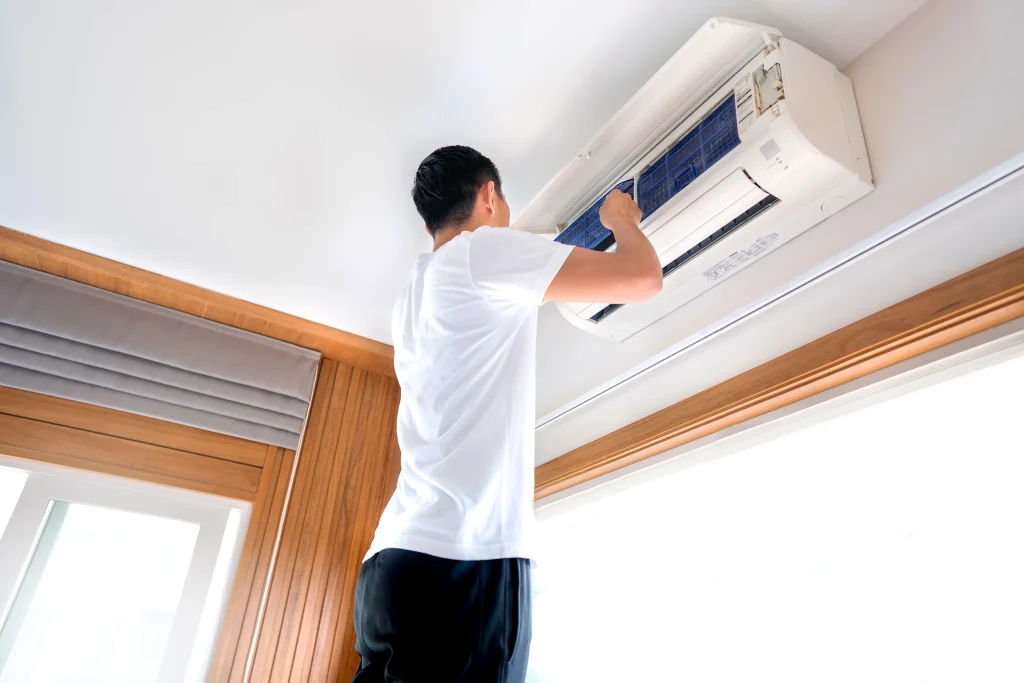
- A single quiet wall unit in a master bedroom or loft office restores immediate sleep quality and functional daytime living.
- By choosing reverse-cycle units, homeowners also gain an ultra-efficient supplementary heating system for the winter months.
British weather patterns have permanently changed. Adapting our homes to stay cool is the next essential phase of British home improvement.
Protect your home and family from summer overheating.
.